It all comes down to energy balance
Your body is a simple ledger: energy in versus energy out. Eat more than you burn, you store the extra as fat or muscle. Eat less, your body makes up the shortfall from its own stores. Every method of losing fat, gaining muscle, or maintaining weight — no matter what it’s called or sold as — is a way of tipping that ledger one way or the other.
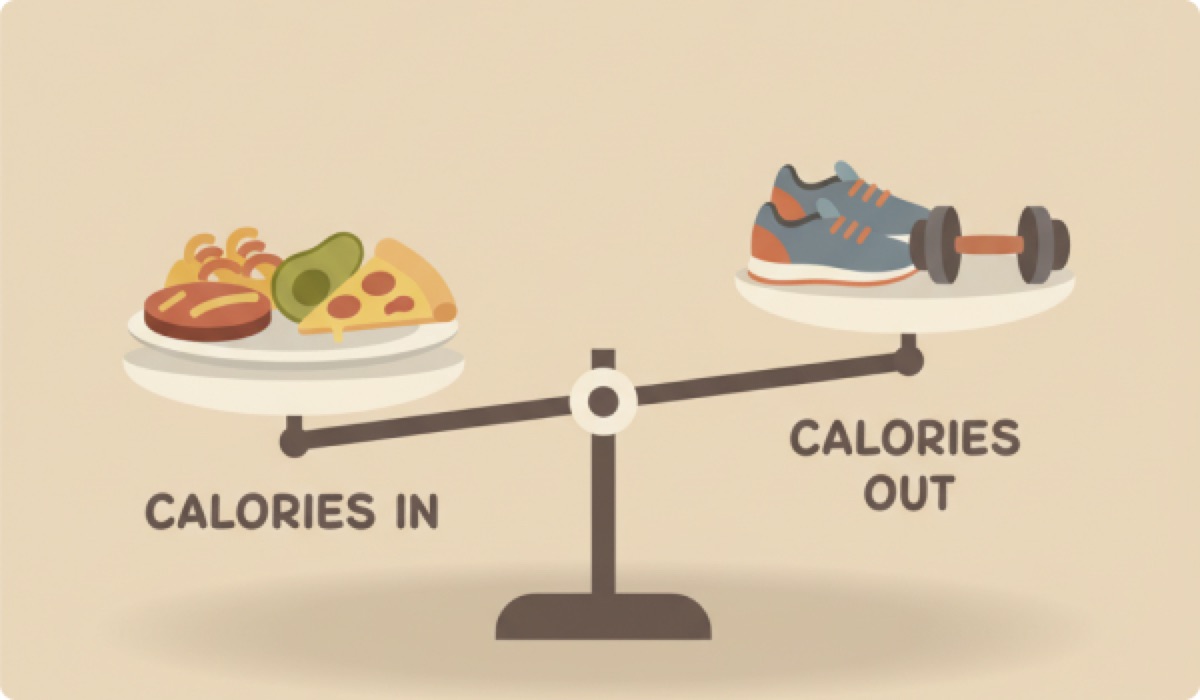
The two numbers that make this work:
- Fat loss: ~7,700 kcal deficit burns roughly 1 kg of fat. Fat is a dense, efficient fuel store, so this figure is fairly consistent from person to person.
- Muscle gain: ~3,300 kcal surplus builds roughly 1 kg of muscle. This is a practical figure, not just the tissue’s raw energy content — building new muscle is inefficient, and most of that surplus is the cost of the building work itself, not stored energy sitting in the tissue.
That second number is also why a muscle-building surplus is deliberately small — your coach caps gain at around 0.25 kg a week. Push the surplus higher than that and your body can’t actually build muscle any faster; the extra calories mostly become fat instead.
Where ‘calories out’ actually comes from
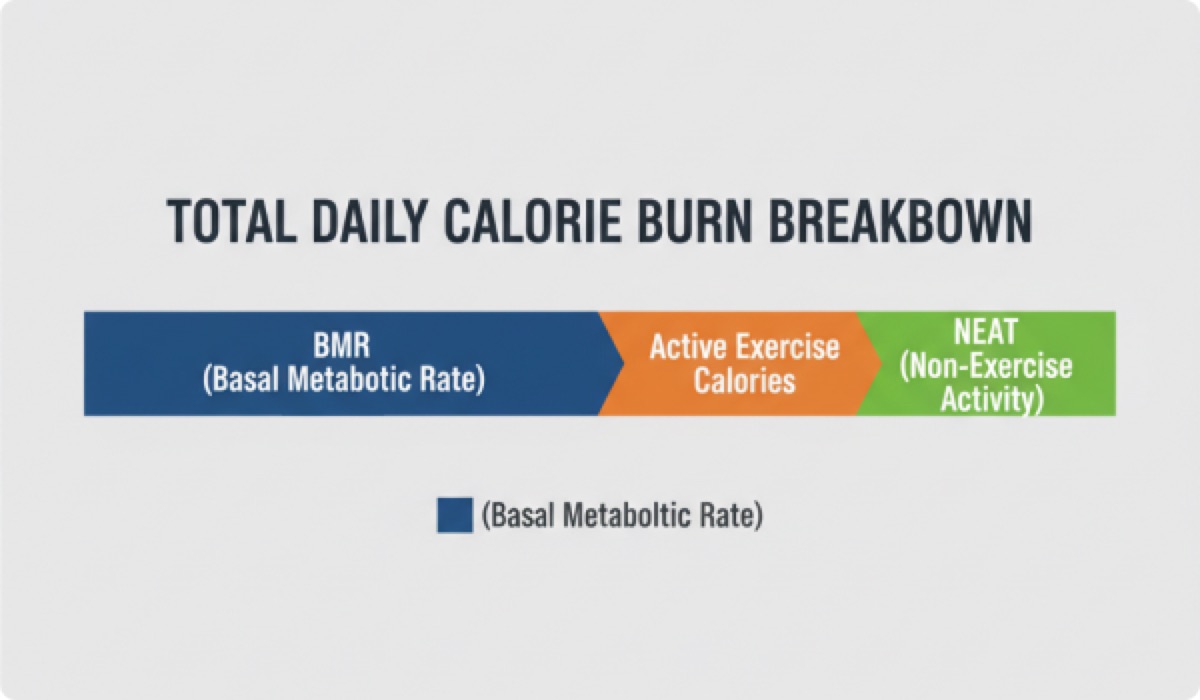
“Calories burned” isn’t one number — it’s three, stacked on top of each other:
1. BMR (Basal Metabolic Rate) — what your body burns just existing: keeping your heart beating, your organs running, your temperature steady. This happens whether you get out of bed or not, and it’s the biggest single share of your total burn for almost everyone.
2. Active calories — what you burn specifically through deliberate exercise: the gym session, the run, the class. This is usually the smallest of the three, even though it feels like the main event.
3. NEAT — Non-Exercise Activity Thermogenesis — everything else you move through in a day that isn’t a workout: walking to the car, standing at your desk, fidgeting, doing the housework. This is where your step count comes in — it’s the simplest proxy for NEAT we have.
Why steps matter, but calories matter more: NEAT can genuinely swing your daily burn by several hundred calories, which is exactly why your coach sets you a step target. But steps are a nudge, not the lever. A single meal can undo an entire day of extra walking in about ninety seconds of eating. Calories in is always the main lever — steps are there to support it, not replace it.
Why protein is tied to your height, not your weight
Your protein target isn’t based on your calories or your current body fat — it’s based on your height, roughly 0.7–1 g of protein per centimetre of height depending on your goal (higher for building muscle, a little lower for pure fat loss).
The logic: protein’s job is to protect and build lean tissue — muscle, mostly. Lean tissue mass tracks much more closely with height (your frame size) than it does with how much body fat you’re currently carrying. Two people the same height but different body fat percentages have a similar amount of muscle to protect — so they need a similar amount of protein, even though their calorie targets might be very different.
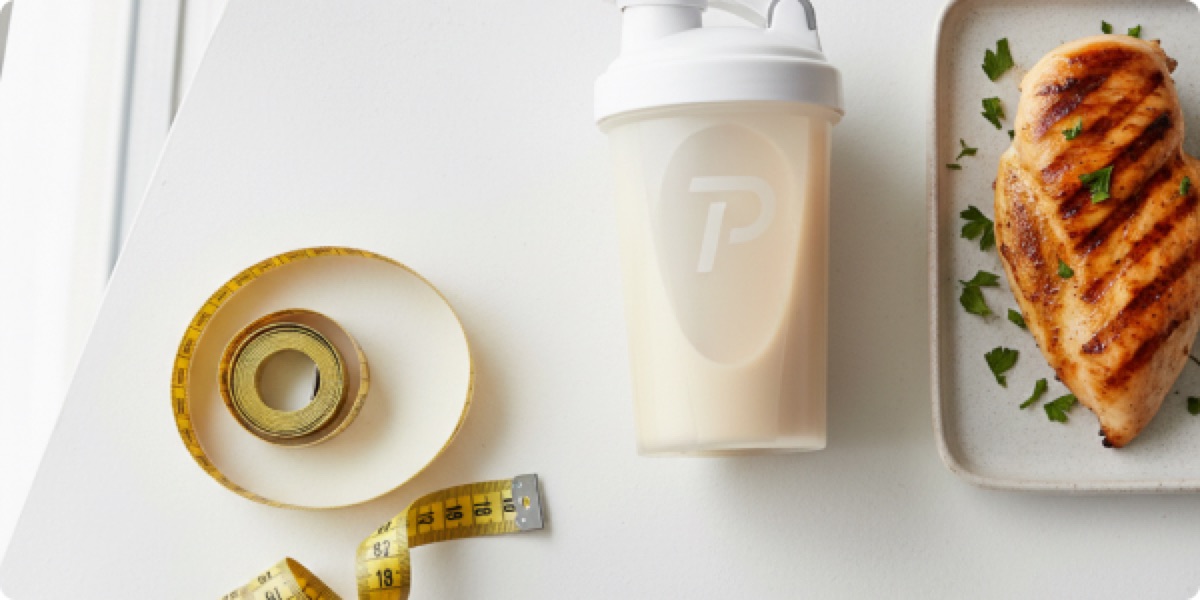
Get enough protein and, in a deficit, your body preferentially burns fat and holds on to muscle. Fall short, and a chunk of what you lose is muscle, not fat — which is the difference between losing weight and losing the right weight.
Why fat has a floor, not just a ceiling
Your macros always keep fat at around 30% of total calories, no matter how aggressive your deficit is. This isn’t about taste or fullness — it’s biological.
Dietary fat is the raw material your body uses to produce hormones, including testosterone and oestrogen. Cut fat intake too low for too long and hormone production can suffer — energy crashes, mood dips, disrupted cycles, stalled progress. Fat is the one macro you genuinely cannot just eliminate to hit a number, at any goal.
Carbs: what’s left over, and why fibre matters most
Once protein and fat are set, whatever calories remain go to carbohydrates — they’re the flexible macro, there to fill the tank and fuel training.
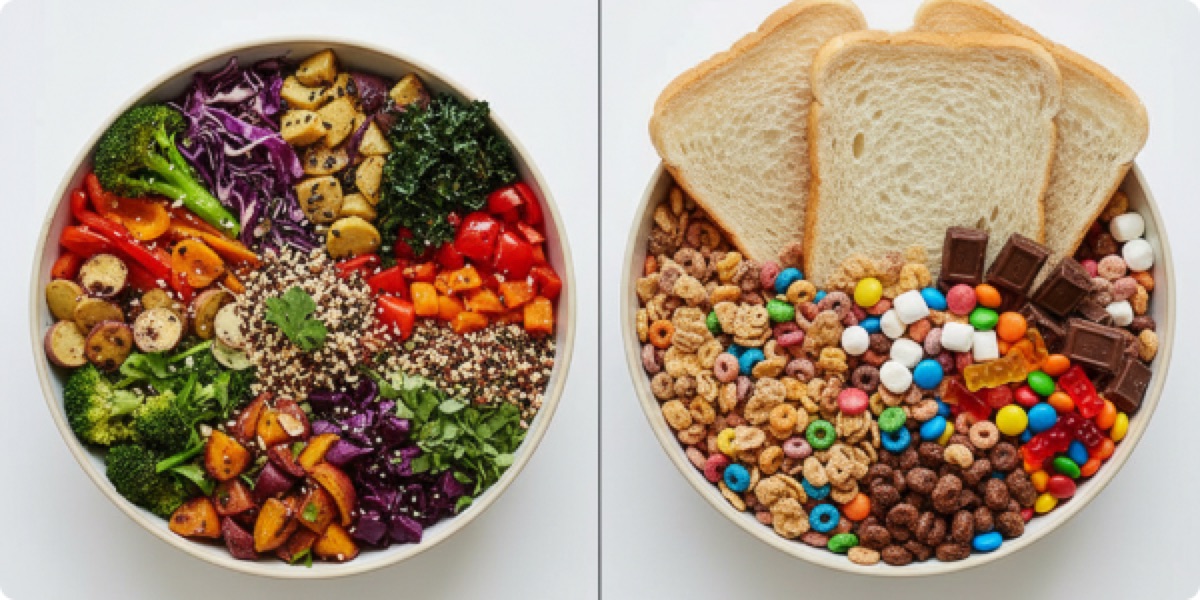
Where possible, favour carbs that are high in fibre — vegetables, whole grains, fruit, legumes — over refined, low-fibre carbs like white bread or sugary snacks. Same calorie count, very different experience: fibre slows digestion, keeps you fuller for longer on the same calorie budget, and is a big part of why some diets feel effortless and others feel like a constant battle against hunger.
A note on weight loss injections (GLP-1s, etc.)
Drugs like Ozempic and Wegovy have become extremely effective for weight loss — but not because they change the underlying maths. They work by suppressing appetite, so people simply eat less without having to fight hunger for it. The energy-balance equation above is still exactly what’s driving the result.
That actually makes tracking more important on these medications, not less. When appetite drops sharply, it’s very easy to under-eat protein and fat without noticing — you’re just not that hungry, so you stop early. Do that for long enough and you can lose muscle and disrupt hormones even while the scale is going the “right” way. Tracking protein and fat specifically is how you make sure the weight you’re losing is fat — not muscle, and not your own hormonal health.
The short version
| Concept | What it means |
|---|---|
| 7,700 kcal deficit | ≈ 1 kg of fat lost |
| 3,300 kcal surplus | ≈ 1 kg of muscle gained |
| BMR | Calories burned just existing |
| Active calories | Calories burned through exercise |
| NEAT (steps) | Calories burned through everyday movement |
| Protein: 0.7–1 g/cm height | Protects and builds muscle |
| Fat: ~30% of calories | Protects hormone production |
| Carbs | Whatever’s left — favour fibre for fullness |
Calories in is the main lever. Steps support it. Protein protects your muscle. Fat protects your hormones. Everything else is detail.